
Medly Updates
Introducing Flashcards
May 18, 2026
We've launched Flashcards — one of the most requested features on Medly, and it's finally here.
How It Works
- Build your deck — Choose the topics you want to cover and create a fully customised deck, with up to 500 cards per deck.
- Flip your way — Press spacebar, click the card on desktop, or tap it on the iOS app to reveal the answer.
- Mark as you go — Use the left and right arrow keys, or swipe left or right, to sort cards into confident and not yet.
- Pick up where you left off — Medly tracks what you marked each way, so your next session can focus purely on the cards you're still working on.
Why It Matters
Flashcards are one of the most effective ways to drill the facts, definitions, and key terms that come up again and again in exams. Now you can build and study them in the same place you're already doing your revision — and keep going until everything sticks.
How to Find It
Open any subject (except Maths and English) and tap the Flashcards tab, right alongside Insights, Practice, and Papers. From there, hit "Create a deck" to get started.
– Paul and Kavi from Medly
Re-Introducing the Medly iOS App
May 8, 2026
We've completely overhauled the Medly iOS app — it now has full feature parity with the website, properly built for mobile.
What's new
- Everything the website does, on your phone — no more switching to a browser to access features that weren't in the app. If it's on the web, it's now in the app too.
- Write full essays on mobile — one of the most-requested things we've heard from you. Long-form and essay questions now work completely on your phone, with the same AI marking you'd get on desktop.
- Progress that follows you — everything syncs across your devices. Start a practice session on your phone during the commute and pick up exactly where you left off on your laptop or iPad later.
Why we made this change
A lot of you were already using Medly on mobile — just not through the app. You were opening the site in Safari or Chrome instead because the app didn't do everything the site did. That shouldn't have been the case, and we've fixed it. The app is now the better mobile experience, built around a smaller screen rather than adapted to fit one.
We're also working on an Android release and will post here as soon as it's live.
How to find it
Search for Medly on the App Store, or update if you've already got it installed. Give it a try and let us know what you think — reach out via Discord or reply to any of our emails.
– Paul and Kavi from Medly
Medly Shuffle — Adaptive Practice Mode
Apr 2, 2026
We've launched Medly Shuffle — a new adaptive practice mode that finds your weak spots and targets them directly.
How it works:
- Scans your spec — Shuffle looks across every topic in your specification to find the gaps.
- Targets weak points — Serves you questions on the topics you need the most help with.
- Adapts in real time — Getting it right? Difficulty goes up. Struggling? It dials back and helps you build understanding.
- No wasted time — Every question is focused on the things that will actually move your grade.
Open any subject, scroll to the bottom of Practice, and you'll see Shuffle. Try it now.
– Paul and Kavi from Medly
Medly Mend
Mar 9, 2026
We're launching Medly Mend — an initiative to fund environmental causes, chosen by you.
How it works:
- We've shortlisted a range of environmental initiatives across areas like reforestation, ocean cleanup, renewable energy, and biodiversity.
- You vote for the ones that matter most to you. Takes less than a minute.
- We fund the initiatives with the most votes and share the results publicly.
– Paul and Kavi from Medly
Medly Mocks 2026
Mar 9, 2026
We're launching Medly Mocks — free practice papers under real exam conditions, marked automatically by AI.
How it works:
- Register for the subjects you're sitting — as many as you like, completely free.
- Sit the papers on the scheduled dates under timed, exam-style conditions.
- Get marked automatically — results feed into your mastery profile so you know exactly where to focus your revision.
Results day: 12th April at 6pm.
Registration is open now. Sign in to register.
– Paul and Kavi from Medly
Medly is Now Freemium
Mar 3, 2026
Medly is now free to use every day. We've scrapped the 3-day trial entirely. Instead, everyone gets limited but free daily usage of Medly — every day, no expiry, no credit card required.
What's Changed?
- No more trial period — The old 3-day trial is gone. You now get free access to Medly every single day, forever.
- Daily usage cap — You'll hit a daily limit on interactive practice and AI feedback at some point, but it resets the next day. We'd rather you use Medly a little bit every day than lose access after three days.
- Textbooks and Learn Mode are fully free — All static content, including the full Textbooks and Learn Mode, is now completely free with no limits. No daily cap, no restrictions. The limits only apply to AI-powered features, which cost us every time you use them. But the static material itself is yours whenever you want it.
Why We Made This Change
We believe consistent daily practice is more valuable than a short burst of unlimited access. The freemium model lets every student build a real study habit with Medly without worrying about a trial running out.
– Paul and Kavi from Medly
Flexible Marking — Upload and Mark Anything
Mar 2, 2026
You can now upload any piece of work to Medly and get it marked against your specification.
What's new?
- Upload anything — Photos of handwritten work, typed essays, past paper answers, homework — whatever you need marked, just upload it.
- Matched to your specification — Medly marks your work against the relevant exam board specification and mark scheme, so the feedback you get is aligned to how your exam will actually be graded.
- Works across subjects — This isn't limited to one subject. Upload work from any subject Medly supports and get detailed, specification-matched feedback.
Why this matters
Previously, you could only get AI marking on questions answered directly inside Medly. Now you can bring in work you've done anywhere — in class, at home, from a textbook — and get the same quality of marking and feedback.
– Paul and Kavi from Medly
Learn Mode Now Available for Sciences
Feb 25, 2026
Learn Mode just got a big expansion. Starting today, Biology, Chemistry, and Physics are all available in Learn Mode — bringing the same step-by-step learning experience to the sciences.
What's New?
When we first launched Learn Mode, it was available for Maths, History, and Geography. Now, all three science subjects are fully supported. That means you can learn any science topic interactively, with questions built in as you go.
How It Works
- Pick a science topic — Choose any topic from Biology, Chemistry, or Physics. For example, cell division, bonding, or electricity.
- Learn step by step — Medly walks you through the material in clear, bite-sized sections with diagrams and equations where needed.
- Answer as you go — After each section, targeted questions check your understanding before you move on.
- Get instant feedback — AI-powered feedback explains what you got right, what to revisit, and why.
Why It Matters
Science subjects are packed with concepts that build on each other. If you miss something early on, everything after it gets harder. Learn Mode catches those gaps in real time so nothing slips through.
How to Find It
Open any Biology, Chemistry, or Physics topic and tap the Learn Mode icon at the top of the page — the same way it works for every other subject.
Learn Mode is now live across Maths, History, Geography, Biology, Chemistry, and Physics, with more subjects on the way. Give it a try and let us know what you think — reach out via Discord or reply to any of our emails.
– Paul and Kavi from Medly
Introducing Question Bank
Feb 18, 2026
We've just launched something we think you're going to love. Say hello to Question Bank — a new way to create your own custom exams on Medly, tailored to exactly what you need to practise.
What is Question Bank?
Instead of working through an entire paper from start to finish, Question Bank lets you pick and choose specific topics to build a custom exam tailored to exactly what you need to practise. You select the topics, the question types, and how long you want it to be. Medly does the rest.
How It Works
- Choose your topics — Pick the specific areas you want to focus on. Only revising algebra? Just select that.
- Build your exam — Medly pulls together questions based on your selections and creates a custom exam for you.
- Sit the paper — Work through the questions just like a real exam. Timed or untimed, it's up to you.
- Get instant feedback — AI-powered marking gives you detailed feedback on every answer so you know exactly where to improve.
Why It Matters
Doing full papers is great, but sometimes you need to drill down on the topics you're weakest at. Question Bank lets you target your revision so you spend time where it actually counts.
How to Find It
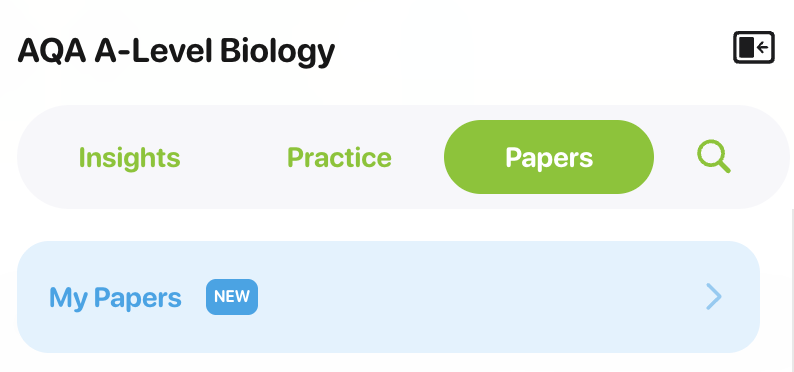
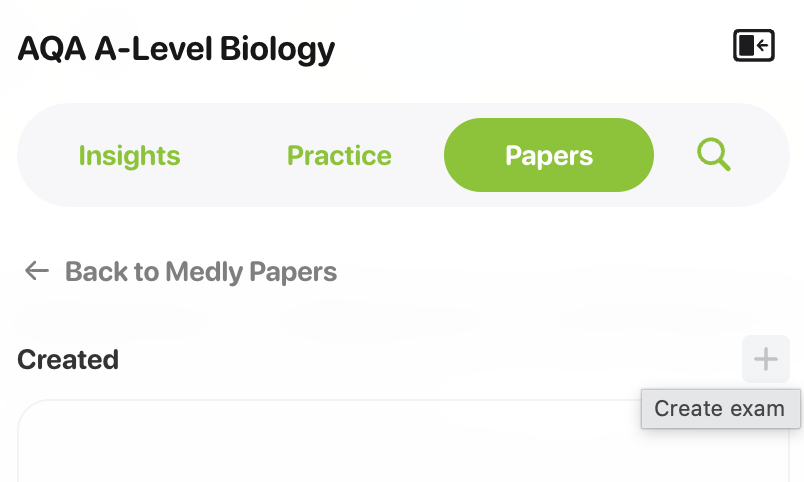
Head to the Papers section, then tap the plus icon to create a new exam. From there you can start building your custom paper.
We'd love for you to give it a try and let us know what you think — just reply to any of our emails or reach out to us directly via Discord.
– Paul and Kavi from Medly
Medly is on Discord
Feb 17, 2026
We've just opened up the official Medly Discord server, and you're invited. We wanted a space where you can talk to us directly, connect with other students, and have a real say in what we build next.
We're building Medly for you, and having a direct line to the people using it makes everything better. Whether you want to report a bug, suggest a feature, or just say hi, we'd love to see you there.
To kick things off, we'll be hosting a Founder Q&A this Friday from 3 to 4pm in the server. Come ask us anything about Medly, what we're working on, or where things are headed.
Oh, and one more thing: the first 100 people to join will receive Beta Tester status, which means you'll get first access to every new feature we release on the platform. The first one? Flexible Marking — upload anything, get it marked, saved, and matched to your exact specification. More details coming soon in the server.
See you in there,
– Paul & Kavi from Medly
Introducing Learn Mode
Feb 14, 2026
We've been working on something we're really excited about, and it's ready for you to try. Say hello to Learn Mode — a completely new way to study on Medly.
What is Learn Mode?
Instead of separating lessons and practice into two different things, Learn Mode brings them together. You work through a topic step by step, and as you go, questions pop up to check your understanding of the specific concept you've just covered, before you move on.
How It Works
- Pick a topic — Choose any topic from Maths, History, or Geography. For example, quadratic equations or the Cold War.
- Learn the concept — Medly walks you through the material in clear, bite-sized sections. No walls of text.
- Answer as you go — After each section, targeted questions test whether you've understood the concept before moving on.
- Get instant feedback — AI-powered feedback explains what you got right, what to revisit, and why. Nothing gets left behind.
Why It Matters
Research shows that testing yourself while you learn — not after — is one of the most effective ways to retain information. Learn Mode is built around this idea. Instead of reading everything and then trying to remember it all, you're actively checking your understanding at every step.
How to Find It
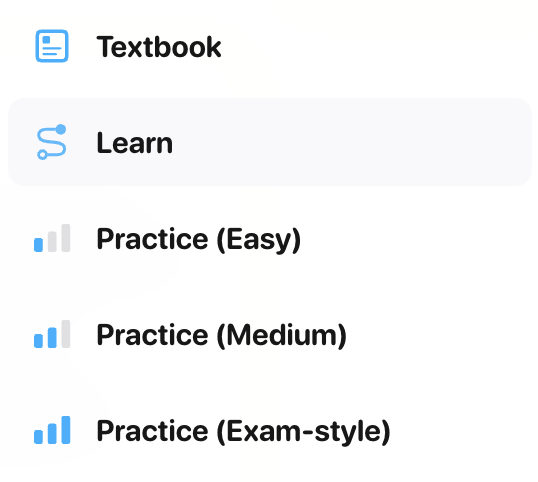
When you open a topic, look for the Learn Mode icon at the top of the page. Just tap it and you're in.

Learn Mode is launching with Maths, History, and Geography, with more subjects on the way. We'd love for you to give it a try and let us know what you think — just reply to any of our emails or reach out to us directly.
– Paul and Kavi from Medly
GCSE Geography Images Added to Textbook
Feb 5, 2026
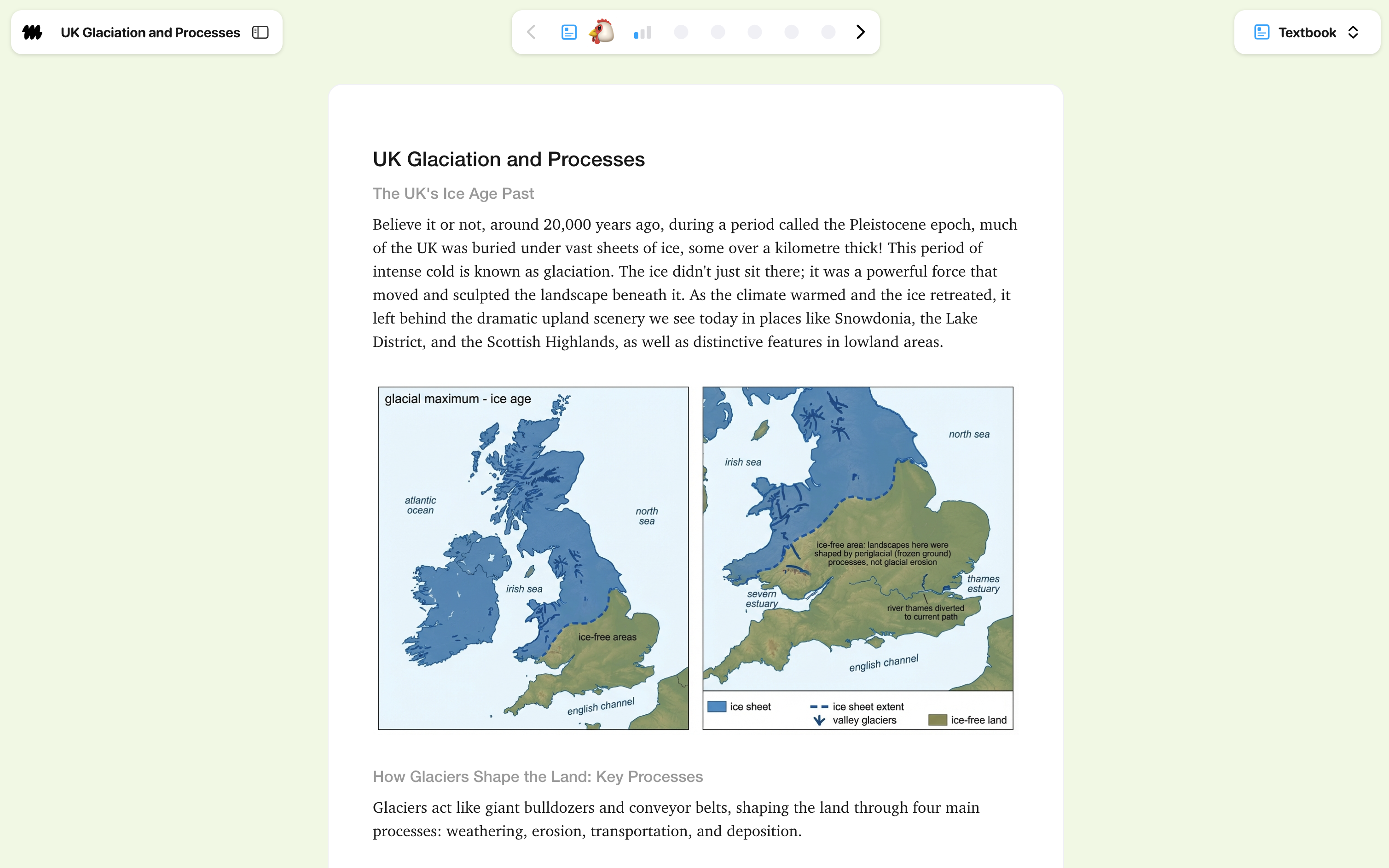
We've added images to the GCSE Geography textbooks, making it easier to visualise key geographical concepts and case studies.
What's New
Geography is a visual subject, from coastal landforms to urban development patterns, understanding often comes from seeing. Our GCSE Geography textbook now includes:
- Diagrams and maps to illustrate physical and human geography concepts
- Case study visuals to help you remember real-world examples
- Process diagrams showing how geographical features form and change
Why This Matters
Many exam questions ask you to interpret diagrams, maps, or photographs. By including these visuals in your study materials, you'll be better prepared for what you'll encounter in the actual exam.
Available Now
These updates are live in the GCSE Geography textbooks. Just head to your Geography course and start exploring.
– Paul and Kavi from Medly
Enhanced Safeguarding & Safety Features
Feb 5, 2026
We've made significant improvements to how Medly handles student safety and wellbeing, reinforcing our commitment to creating a safe learning environment.
New Safety Page
We've launched a dedicated Safety page that explains in clear terms how we keep students safe, what our AI does when it detects a concern, and where to find support. This page is designed for both students and parents to understand our safeguarding approach.
Improved Safeguarding Detection
Our AI tutor now has enhanced sensitivity to both direct and indirect expressions of distress. This includes better recognition of:
- Indirect language and "asking for a friend" scenarios
- Contextual cues within conversations
- Subtle indicators that a student may need support
Stricter Session Lockout Protocols
When the AI detects a safeguarding concern, it now activates a stricter session pause protocol. This means:
- The AI will not continue with tutoring after a disclosure
- Even if a student says "I'm fine" or "let's continue", the AI maintains its supportive position
- Wellbeing is prioritised over revision — no exceptions
Regular Human Testing
We've implemented a comprehensive testing programme where our team manually audits the AI's safeguarding responses. This ensures our safety features work as intended and align with Department for Education guidance on responsible AI in education.
Your safety matters to us just as much as your learning.
– Paul and Kavi from Medly
Diagrams Added to All STEM Textbooks
Jan 31, 2026
We've added colourful, engaging and clearly labelled diagrams throughout all of our STEM textbooks to help you visualise complex concepts and boost your understanding.
Subjects Updated
Diagrams have been added across both A Level and GCSE science subjects for AQA, Edexcel and OCR:
- A Level Biology
- A Level Chemistry
- A Level Physics
- GCSE Biology
- GCSE Chemistry
- GCSE Physics
What's Next
This is part of our ongoing effort to make Medly the most effective study tool possible. We'll continue adding visual content and improving our materials based on your feedback.
– Paul and Kavi from Medly
Introducing Medly Mondays
Jan 29, 2026
We're launching something new to make Medly more accessible for everyone: Medly Mondays.
How It Works
Every Monday, one of our subjects will be completely unlocked — free, with unlimited practice access for the entire day. The subject will rotate each week, giving you the chance to benefit across different areas of your revision.
This first week's free subject is Biology.
Why We're Doing This
As a social enterprise, we want to make sure every student has access to high-quality learning tools, regardless of your background. Many of you have shared how helpful Medly has been, and we know that not everyone is in a position to upgrade.
Medly Mondays is our way of giving you more flexibility and supporting your revision outside of school.
What This Means For You
If you're on the free version of Medly, you'll now have one day each week where you can use the practice mode in that week's subject without limits. Use it to catch up on topics you've been wanting to explore, or dive deep into practice questions before an upcoming test.
We'd love to hear what you think, if you have any feedback, just reply to any of our emails or reach out to us directly.
– Paul and Kavi from Medly
Upgraded Marking Across Subjects
Dec 22, 2025
We've updated several models across our platform to improve the general reliability of marking across subjects and question types.
Stepwise Improvement in Reliability
You should see a stepwise increase in reliability and accuracy, particularly in:
- Longer English Essay marking – more consistent evaluation of extended responses
- Maths questions – improved recognition of working and method marks
- Science questions - improved recognition of both misconceptions and correct understanding but missing keywords or phrases leading to marks being dropped
These improvements build on our previous updates and represent a significant upgrade to our core marking infrastructure.
Better Handling of Edge Cases
This update is particularly helpful against edge-case marking criteria. Previously, answers that were partially correct or marked incorrect—but demonstrated good understanding of a topic or concept weren't always recognised appropriately.
Now, our models better identify when a student:
- Shows solid conceptual understanding but has a small misconception leading to an incorrect final answer
- Demonstrates correct methodology but makes a minor error in execution
- Partially addresses marking criteria while missing other elements
Why This Matters
We know it can be frustrating when you understand a concept but lose marks due to a small mistake or misconception. Our updated models now provide more nuanced feedback in these situations, helping you understand exactly where your reasoning was strong and where the gap in understanding occurred.
Continuous Improvement
We're committed to making Medly's marking as accurate and helpful as possible. These model upgrades are just the start of an ongoing process of improvement as the technology and our understanding of how to solve these problems improve.
– Paul and Kavi from Medly
Improved English essay marking
Nov 28, 2025
We've improved marking for English essays and practice questions.
Some users found that Medly was marking some English essays inconsistently or not quite right.
Essay marking is a difficult challenge that teachers and exam boards have to deal with. According to Ofqual research, English grades are significantly less reliable than other subjects - with around 1 in 4 grades potentially changing if remarked by a different examiner.
Just like teachers sometimes mark essays differently, Medly won't always be perfect - but our team is working hard to ensure that we mark in a fair and accurate way.
Marking inconsistencies were a frustrating aspect of our own experiences of GCSE English - we didn't have private tutoring so we weren't able to get regular personalised feedback on our essays.
We're committed to being transparent about how Medly marks your work and continuously improving our marking accuracy, so that Medly becomes the thing we wish we'd had when we were preparing for GCSEs.
Here are the updates we've been working on for the past few weeks.
More Consistent Marking
We've reduced variation in marking, particularly for longer essay questions. While some natural variation exists (just like with teachers), you'll now get more reliable and consistent feedback across similar responses.
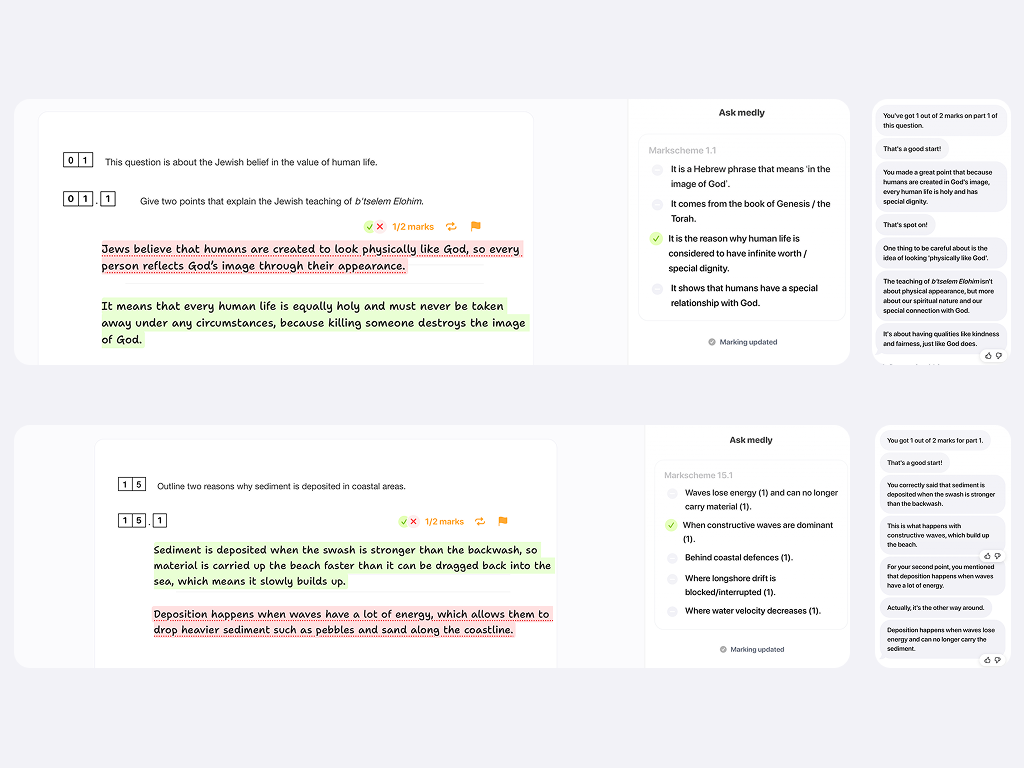
More Nuanced Marking
Medly now better recognises subtle inaccuracies in your answers, giving you more accurate feedback on your work.
Previously, marking could sometimes be too lenient or too strict.
Now, it evaluates answers with greater precision, helping you understand exactly where you can improve.
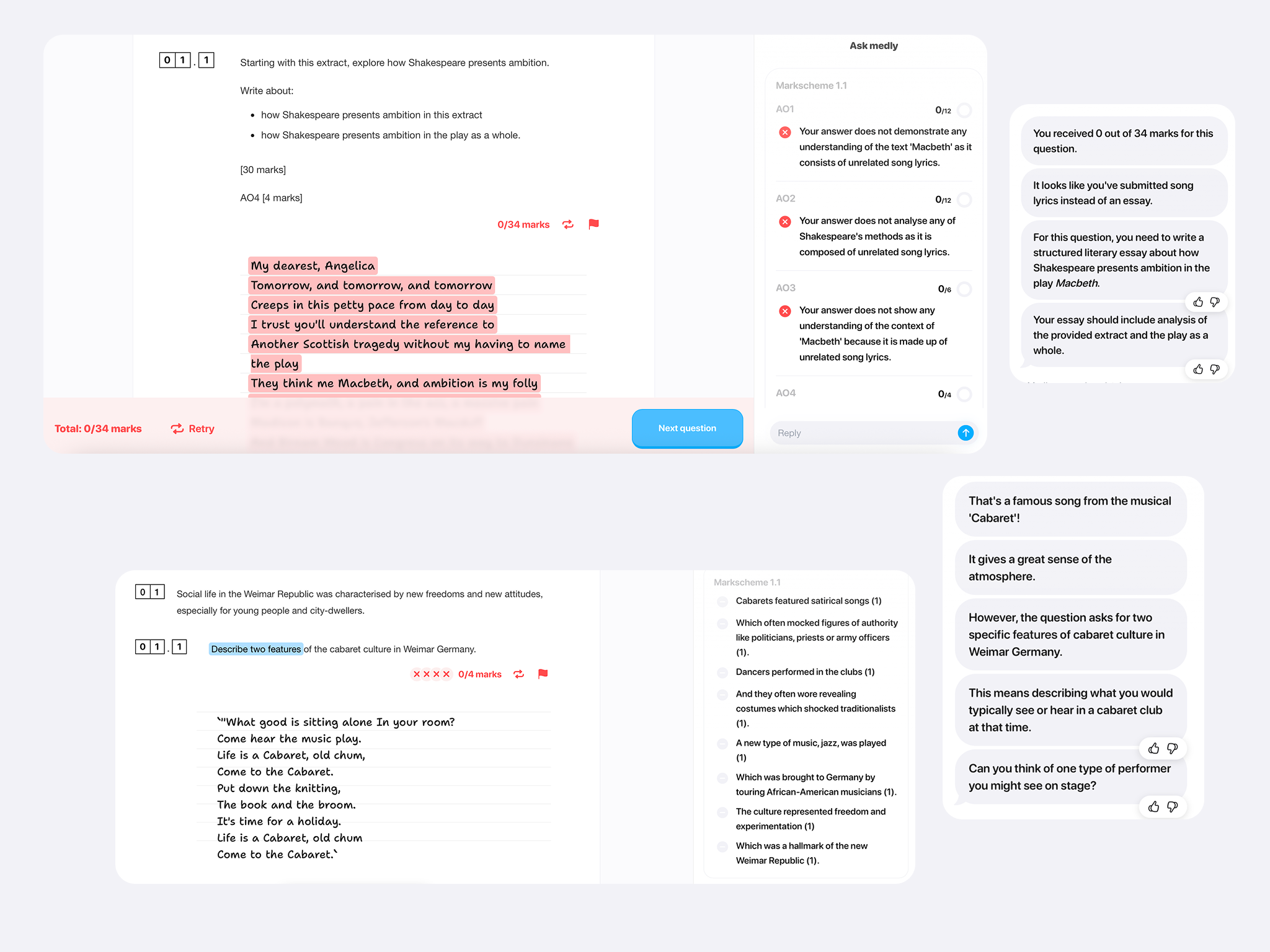
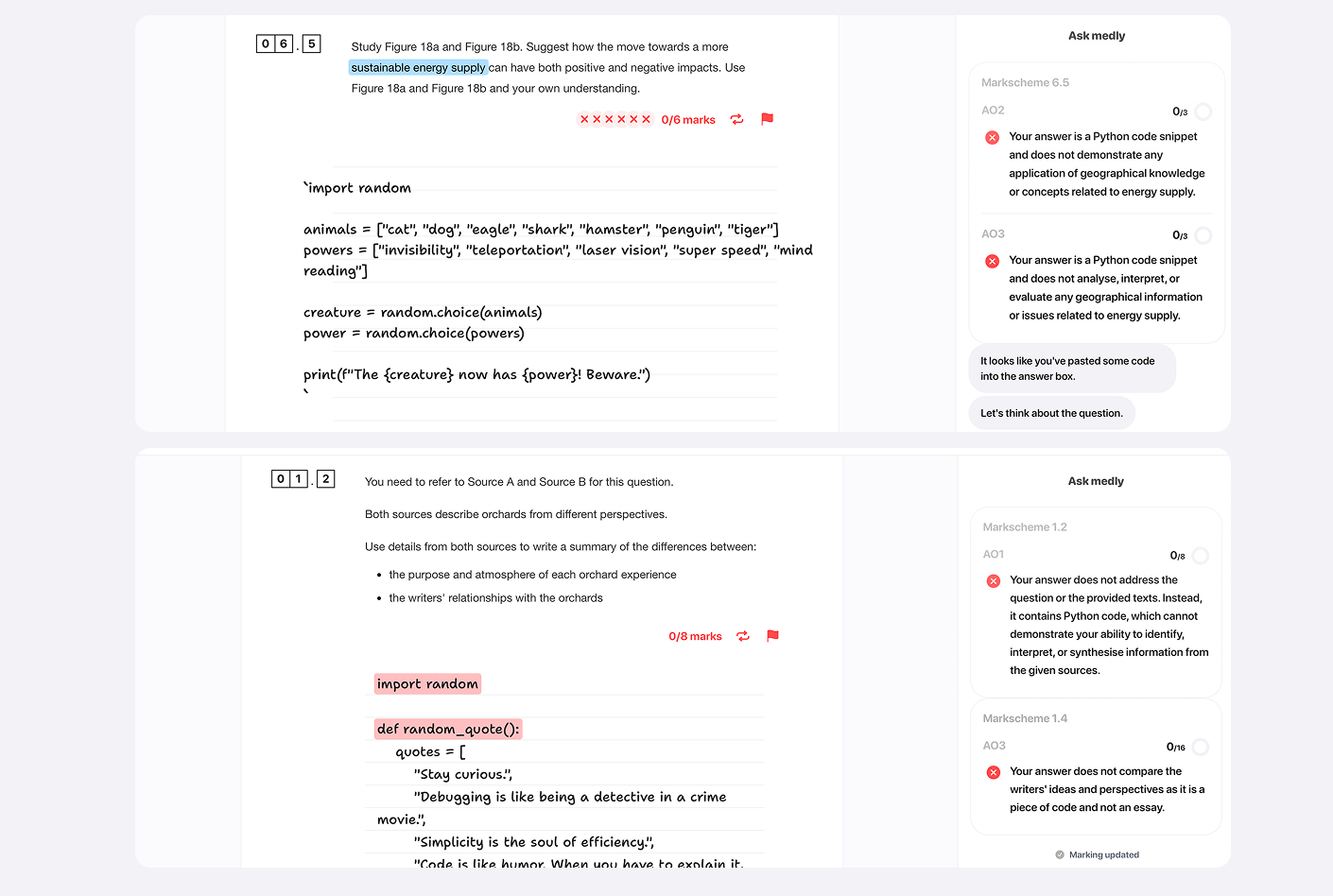
Better Recognition of Off-Topic Responses
Medly now better identifies when answers don't address the question, even if they're on a related topic.
This means you'll get more accurate feedback when your response doesn't fully engage with what's being asked, helping you develop stronger exam technique.
Marking and feedback
These marks are just an indication of where you stand - what really matters is understanding how to strengthen your essays.
Use Medly to refine your work and develop your skills, then if you're unsure about anything, ask your teacher for guidance after you've improved your essays with Medly's feedback.
– Paul and Kavi from Medly
Improved mathematical handwriting recognition
Nov 27, 2025
We've improved handwriting recognition for maths.
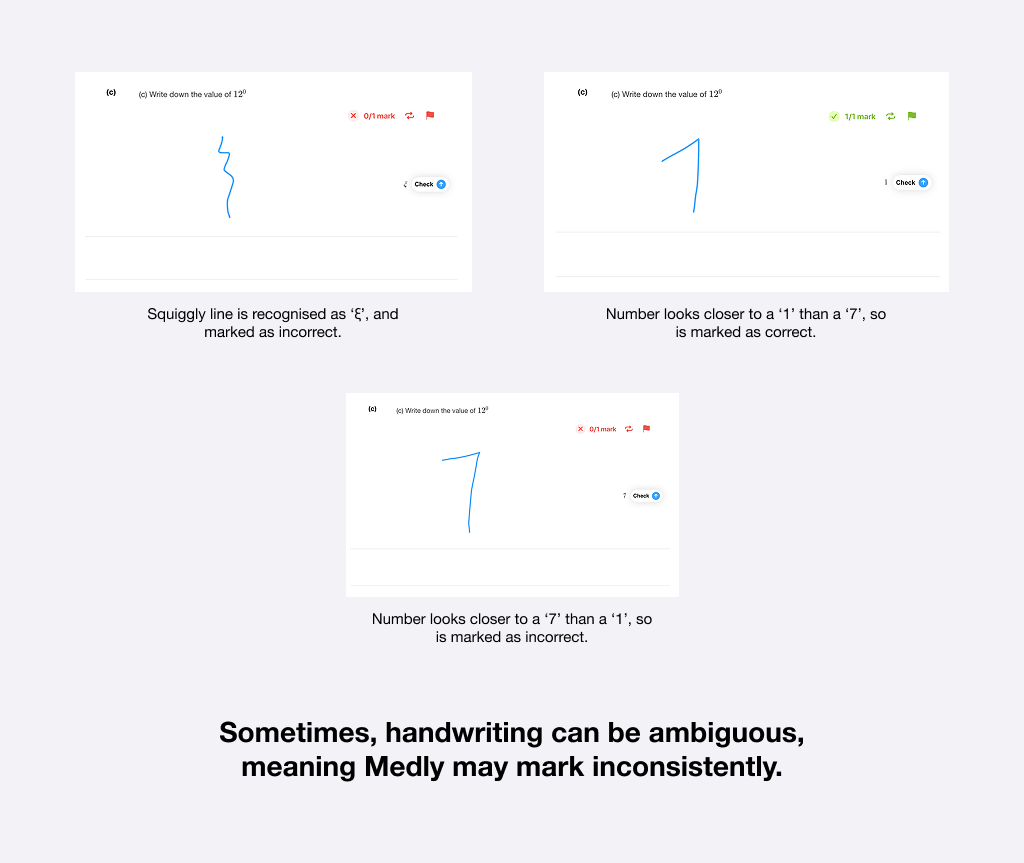
Some users found that Medly was sometimes marking handwritten maths incorrectly.
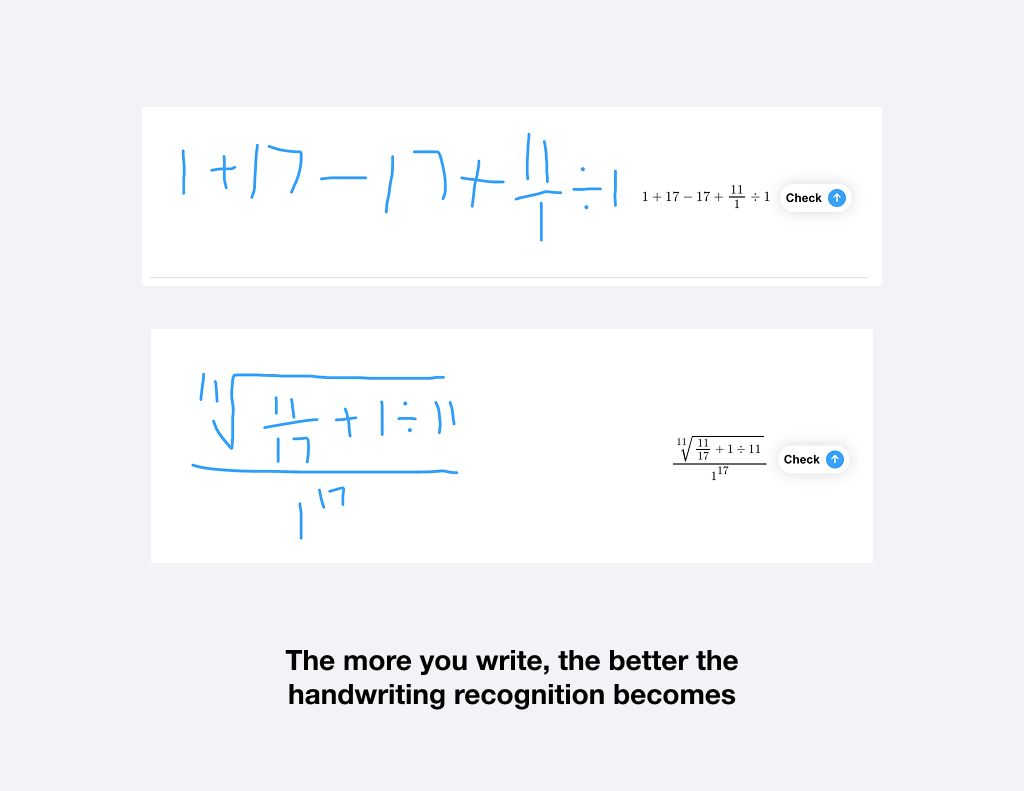
We looked into the issue and identified that this was caused by Medly incorrectly recognising handwriting, so we've pushed updates to handle ambiguous shapes and lines better.
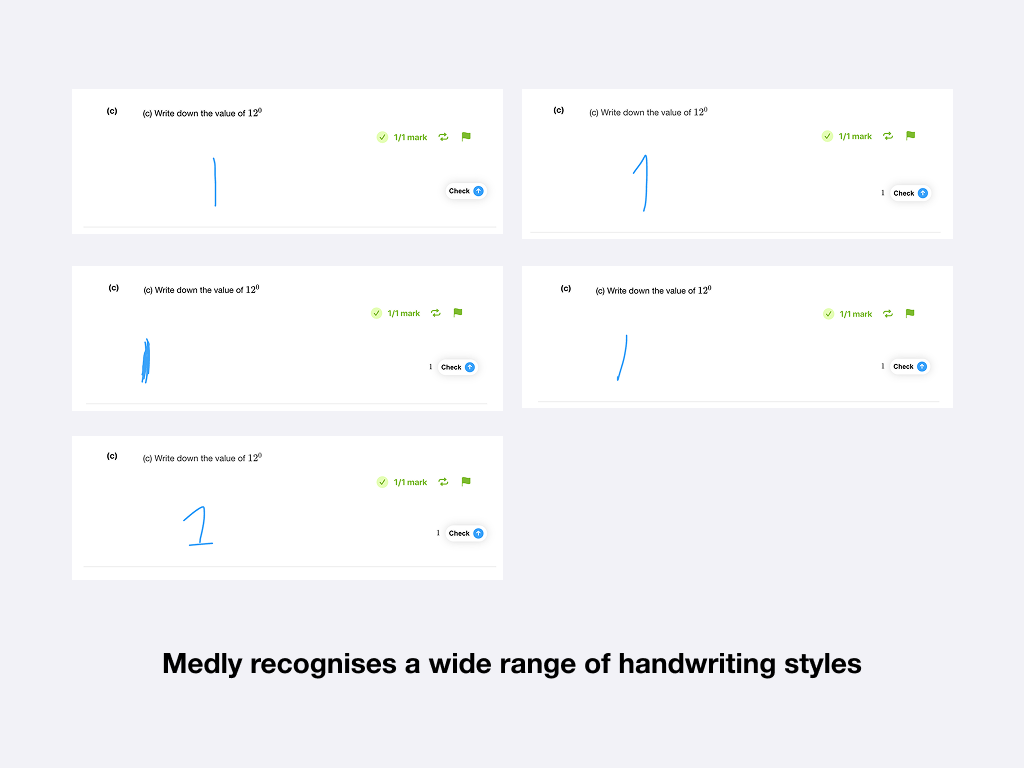
How to Check Your Work
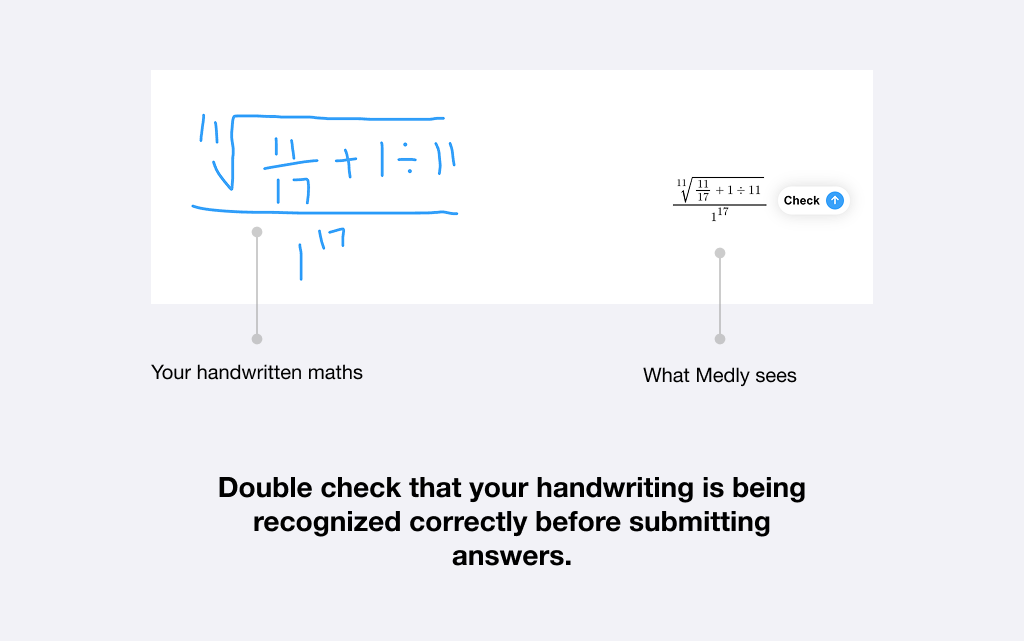
The default maths handwriting mode on Medly shows you what Medly "sees" on the right side of each line of working, so you can check that Medly is reading your work correctly.
A Technical Challenge
This is a hard technical challenge. Just like teachers sometimes misread handwritten work, it won't always be perfect - but we'll keep actively working on this and improving it.
– Paul and Kavi from Medly
Improved mathematical proof question marking
Nov 26, 2025
Based on your feedback, we've made proof questions smarter and more accurate.
Previously, some users found that Medly was marking proof questions too generously - sometimes awarding marks even when answers were simply copied without proper working.
Now, our marking system carefully evaluates each step of your proof, ensuring you receive marks for demonstrating genuine mathematical reasoning rather than just stating the final result.
– Paul and Kavi from Medly
Our Environmental Commitment
Nov 18, 2025
Environmental responsibility matters to us. As an AI-powered education platform, we're committed to transparency about our environmental impact so here's what we've done so far and how we'll be further improving our emissions.
This is our complete emissions breakdown, honest comparisons to the platforms you use every day, and concrete action plans for the future.
Where We Stand Today
A student using Medly for an entire year generates just 667 grams of CO₂e.
That's less than 0.05% of a single return flight from London to New York—or about 0.3% of a short-haul return flight within the UK. It's the same as a 45-minute car journey. Less than one tank of petrol spread across a full year of personalized AI tutoring.
Compare that to the apps you use every day:
- TikTok scrolling: About 2.9g CO₂e per minute[3]. An hour a day for a year equals roughly a London to Barcelona return flight per user—77x more than using Medly for a year
- Instagram: Roughly half of TikTok's per-minute emissions[3]
- YouTube/Netflix streaming: 50-60g CO₂e per hour depending on quality and device
Annual per-user emissions for major platforms:
- Google services (Search, YouTube, Gmail, etc.): Equivalent to about five London to Edinburgh flights per user[4]
- Meta platforms (Facebook, Instagram, WhatsApp): Equivalent to about two London to Edinburgh flights per user[5]
- Netflix: Equivalent to about four London to Edinburgh flights per user[6]
Using Medly for an entire year generates less emissions than scrolling TikTok for 17 minutes total.
Medly's total annual emissions: Roughly equivalent to 40 people getting return flights from London to New York[1], or about 200 short-haul flights within the UK—for an entire year running an AI tutoring platform serving 90,000 students monthly.
For context, the average EU small-to-medium enterprise emits around 75 tonnes of CO₂ annually[2]—equivalent to about 50 return London to New York flights. By building efficiency into our AI infrastructure from day one, we've achieved emissions below typical SME levels—while serving 90,000 students monthly with an adaptive AI tutoring engine that personalizes in real-time.
How We Achieved These Low Emissions
Responsible Infrastructure Partners: From day one, we've chosen hosting and AI API providers that operate data centers with strong environmental credentials. Google's data centers, for example, achieve an average Power Usage Effectiveness (PUE) of 1.09 compared to the industry average of 1.56—meaning they use about 84% less overhead energy for every unit of computing power[7]. They've also matched 100% of their annual electricity consumption with renewable energy since 2017[7].
Smart Technical Architecture: We've built specialized model router techniques to intelligently reduce the number of large language model calls, routing requests to smaller, more efficient models wherever appropriate. This architectural choice means we achieve the same educational outcomes with significantly lower computational overhead.
As we scale, our per-user emissions continue to decrease—and we're committed to making them even lower as we grow.
Our Efficiency-First Design
AI-Powered Platform: Our proprietary multi-model architecture uses specialized smaller models purpose-built for education rather than one massive general-purpose model. This makes us more efficient than standard AI systems while delivering better educational outcomes.
Lean, High-Impact Team: We're delivering significant educational impact to 90,000 monthly active users with a focused team, maximizing our positive impact per person on the team.
Cloud-Native Operations: We've built smart from the start—no owned data centers, vehicles, or manufacturing facilities. This enables us to scale efficiently while partnering with providers who share our environmental values.
Our Complete Emissions Breakdown
Here's our detailed emissions breakdown for the past year:
AI & Cloud Computing: 47.4%
- Platform infrastructure, databases, and AI tutoring engine
Office Equipment & Leased Workspace: 34.8%
- Laptops, monitors, desks, and office space we rent
Team Commuting & Remote Work: 14.1%
- Travel to work and home office electricity
Office Waste & Utilities: 1.2%
- Rubbish disposal and office utilities
Direct Company Emissions: 2.5%
- Minimal direct emissions from our operations
Our Commitment to Carbon Neutrality
Immediate Actions (0-6 Months)
We're actively:
- Migrating more of our compute workloads to data centers with the strongest environmental credentials and renewable energy commitments
- Refining our specialized model router techniques to further reduce large language model calls
- Expanding use of smaller, more efficient models where they maintain educational quality
- Establishing internal metrics for tracking emissions per user
- Optimizing our AI architecture to eliminate unnecessary compute
Medium-Term Commitments (6-18 Months)
Carbon Offsetting with Student Input: We'll begin offsetting our emissions through Gold Standard accredited carbon removal projects—and we're doing it with your input. We're involving our students directly in choosing which verified offsetting projects we invest in, giving you a voice in shaping our environmental impact.
We're also:
- Setting per-user emissions targets as we scale
- Continuing infrastructure optimization to reduce emissions at source
- Partnering with additional renewable energy-focused providers
Long-Term Vision (18+ Months)
Net Zero Commitment: Our ultimate goal is achieving net-zero emissions across our operations. As we expand globally and add new qualifications, we're building this commitment into everything we do.
How we'll get there:
- Building efficiency into every new market and qualification launch
- Exploring and implementing emerging green AI technologies
- Integrating sustainability into our product development lifecycle
- Maintaining per-user emissions well below industry benchmarks as we scale
- Working toward complete carbon neutrality through verified offsets and emission reductions
Transparency First
We're committed to sharing:
- Infrastructure optimization results
- Carbon offset investments and their impact
- Honest reporting if we fall short
Complete transparency is how we hold ourselves accountable. As we grow, we're committed to sharing our progress, celebrating our wins, and being honest about where we can improve.
We welcome your questions and suggestions about our environmental efforts—your input makes us better.
To our students: we're building this together. Your future matters, and we're committed to protecting it while helping you achieve your potential.
— The Medly Team
References
[1] Flight emissions based on average return economy flight London to New York: ~1.5 tonnes CO₂e per passenger. UK Government GHG conversion factors for company reporting.
https://www.gov.uk/government/collections/government-conversion-factors-for-company-reporting
[2] EU SME emissions: EU SMEs emit on average 75 tonnes of CO₂ annually. Green.earth SME Carbon Footprints Guide.
https://www.green.earth/blog/sme-carbon-footprints-a-practical-guide
[3] TikTok per-minute emissions: Greenly carbon accounting study, December 2024. "TikTok's carbon footprint as big as Greece, study claims." The Guardian.
https://www.theguardian.com/technology/2024/dec/12/tiktok-carbon-footprint
[4] Google services per-user annual emissions: Estimated from Google's 2023 Environmental Report divided by global active users across Search, YouTube, Gmail, and other services.
https://www.gstatic.com/gumdrop/sustainability/google-2023-environmental-report.pdf
[5] Meta platforms per-user annual emissions: Estimated from Meta's 2023 Sustainability Report divided by global active users across Facebook, Instagram, and WhatsApp.
https://sustainability.fb.com/reports/
[6] Netflix per-user annual emissions: Estimated from Netflix's 2023 Environmental Social Governance Report divided by global subscriber base.
https://about.netflix.com/en/news/netflix-2023-environmental-social-governance-report
[7] Google data center efficiency and renewable energy: Google Data Centers - Operating Sustainably. Data center PUE of 1.09 vs industry average of 1.56, and 100% renewable energy match since 2017.
https://datacenters.google/operating-sustainably/
All flight and travel comparisons use standard UK short-haul (London-Edinburgh) and long-haul (London-New York) economy class emissions factors. Car journey comparisons based on average UK petrol car emissions of 180g CO₂/km.
BTS Medly Mock Results
Oct 11, 2025
Results Day has arrived! Your 2025 Back to School Medly Mocks results are now live.
Congratulations again on completing your 2025 Back to School Medly Mocks!
Your results are waiting for you. Log in now to see your performance and start improving.
BTS Medly Mocks
Oct 3, 2025
The 2025 Back To School Medly Mocks have officially started!
You can now log into your Medly account and begin taking your registered exams anytime over the next two weeks.
Ready to Get Started?
- Log into your Medly account and navigate to your registered exams
- Choose when to take each exam - you have full flexibility during the 2-week window
- Remember: The Back to School Medly Mocks are designed to help you understand where you stand at the start of the year and identify your strengths and areas for growth. So don't stress if you can't answer everything. Just do your best on what you know!
What to Expect
- Instant feedback after completing each exam
- Realistic exam conditions that mirror actual GCSE/A-Level papers
- Nationwide comparisons on Results Day to see exactly where you stand
Need Help? If you have any technical issues accessing your exams or questions about the process, don't hesitate to reach out to our support team.
Welcome back to school!
Sep 5, 2025
We're excited to share some exciting updates - here's what's new: thousands of new practice questions, faster AI marking and easier subject navigation. And by popular demand, GCSE Foundation and Combined Sciences are now available!
Build exam confidence from day one
Why wait until exam day to face real exam questions? Work with realistic, exam-style questions from day one, supported by AI tutoring and instant feedback.
A cleaner, simpler interface
We've completely redesigned the Medly interface to make studying simpler. Move between subjects effortlessly, find topics faster, and spend more time learning - not navigating.
Advanced Teaching
With new teaching tools, our AI Tutor can now highlight key parts of each question as it guides you, while tracking your working to give live, tailored feedback.
GCSE Foundation and Combined Sciences
You can now switch your subjects in the sidebar to access GCSE Foundation and Combined Sciences, with content tailored to your exact course.
We've also improved question quality across all subjects—working with teachers to ensure every corner of your specification is covered and matches what you'll see in real exams.