
Our Story
Why we left the NHS to build the study tool we wished we'd had growing up, and what we're working towards.
On this page
We built Medly because we believe every student deserves access to personalised education, not only students whose families can afford private tutoring. We are two doctors who left the NHS to make that support more widely available. Since launching, more than 400,000 students have used Medly. Each month, 90,000 students use it for an average of 38 minutes a day. In our 2025 GCSE analysis, 74% of surveyed students improved their grades while using Medly, and 40.5% improved by two or more grades.
This is our story, what we stand for, and where we are going.
Our Founders
We're Paul Jung and Kavi Samra, and we've been friends since Year 7. We went through school and medical school together, studied medicine at UCL, and later left our NHS careers to build Medly.
Paul grew up in Northolt as the child of first-generation immigrants. Kavi grew up on a council estate in Slough, passed the 11+ exam to attend grammar school, and went on to study medicine. Neither of us had access to private tutoring growing up. At medical school, we realised that many of our peers had received that kind of help throughout their education, while we had spent years catching up.
We both tutored to help cover our living expenses at university. We saw our students improve their grades and enjoy their subjects more. We also saw how unfair it was that this support was available only to families who could afford it. We tried a few ways to address that at university, but none worked out.
After the COVID-19 pandemic, we were both practising doctors. We had seen how closely health outcomes are tied to socioeconomic background, and how education can change a person's opportunities. We decided to leave medicine and build the study tool we had wished for when preparing for our own GCSEs and A-Levels.
Our Mission
Our mission is to make personalised learning accessible to every student, whatever their background.
We put this mission into practice in how we run Medly. We track and report how many students we reach in areas with the highest levels of deprivation, so we can see whether we're reaching students who have less access to personalised education. We also provide free access to schools in these areas, helping remove cost as a barrier for their students.
What We Believe
Educational equality is in our DNA
We measure success by our reach to students from the most deprived backgrounds. Free access for schools in underserved areas, nationwide free mocks, a bursary scheme for students who cannot afford a subscription, and Medly Mondays where one subject is completely unlocked every Monday are all part of how we put this into practice.
Made for learning
Medly doesn't write essays for students. Medly guides them towards answers, as a good tutor would, and takes care of routine practice so they can focus on learning.
Teachers are partners
We know many teachers chose the classroom to inspire young minds. Medly supports adaptive learning and practice, giving teachers more room to connect with students, spark curiosity, and help them explore subjects they love.
Privacy is non-negotiable
We follow the Age Appropriate Design Code. For regular users, we don't collect names, addresses, or school details. We don't use user data to train third-party AI models, and we're registered with the ICO and comply with GDPR.
Sustainability matters
We want to reduce the environmental impact of the services we run. The hardware we use is powered by renewable energy, and we fund Gold Standard carbon removal projects. We estimate that the average Medly user accounts for approximately 667g CO2e per year, less than a short car journey.
What We Build
We build tools to support students at different stages of their studies.
With Medly Exams, we help secondary school students prepare for GCSEs, IGCSEs, A-Levels, and IB in the UK, as well as AP exams and the SAT in the US. Students can practise longer answers, including the higher-mark questions that often appear towards the end of papers. The platform includes an AI tutor, handwriting recognition for tablet users, full-length mock exams with grade boundaries and personalised feedback, and Learn Mode, which brings lessons and practice together.
Medly Open gives university students a way to study from their own course materials. They can upload lecture slides, recordings, readings, and past papers, and we tailor their study experience around that content. It works with courses at any university, and students at UCL, Imperial College London, Cambridge, Queen Mary, and King's College London use it.
Our mobile apps for iOS and Android do everything the website does, including long written answers and essays with the same marking, and progress syncs across devices so students can carry on wherever they are.
We have experienced, qualified teachers review all Medly Exams content. They bring up to 30 years of teaching experience, senior examiner roles, QTS qualifications, and detailed knowledge of AQA, Edexcel, OCR, WJEC, and Cambridge exam boards.
Social Impact
We work to make educational support easier to access, whatever a student's financial circumstances.
We run Medly Mocks twice a year, at Easter and Christmas, and they're free for students across the UK. Students sit full-length papers under exam conditions, then receive personalised, curriculum-accurate feedback, grade boundaries, and a dedicated Results Day experience. Thousands of students take part each time, with no cost to sit the papers.
With Medly Mondays, we make one subject completely free every Monday. The subject rotates each week across English Literature, Maths, Chemistry, Physics, Biology, History, Geography, Computer Science, Economics, Business, Psychology, and English Language. Students don't need an account.
Our Medly Bursary Scheme supports students aged 14-18 in Years 10-13 who face financial barriers. We offer up to 50 places each month, with free access until the end of the school year. We review applications monthly.
Through School Partnerships, we provide free access to schools in areas with high levels of deprivation. We also work with charities, schools, and teachers to bring Medly into more classrooms.
Our Team
We're a team that reads user comments and feedback, including criticism, because it helps us improve Medly.
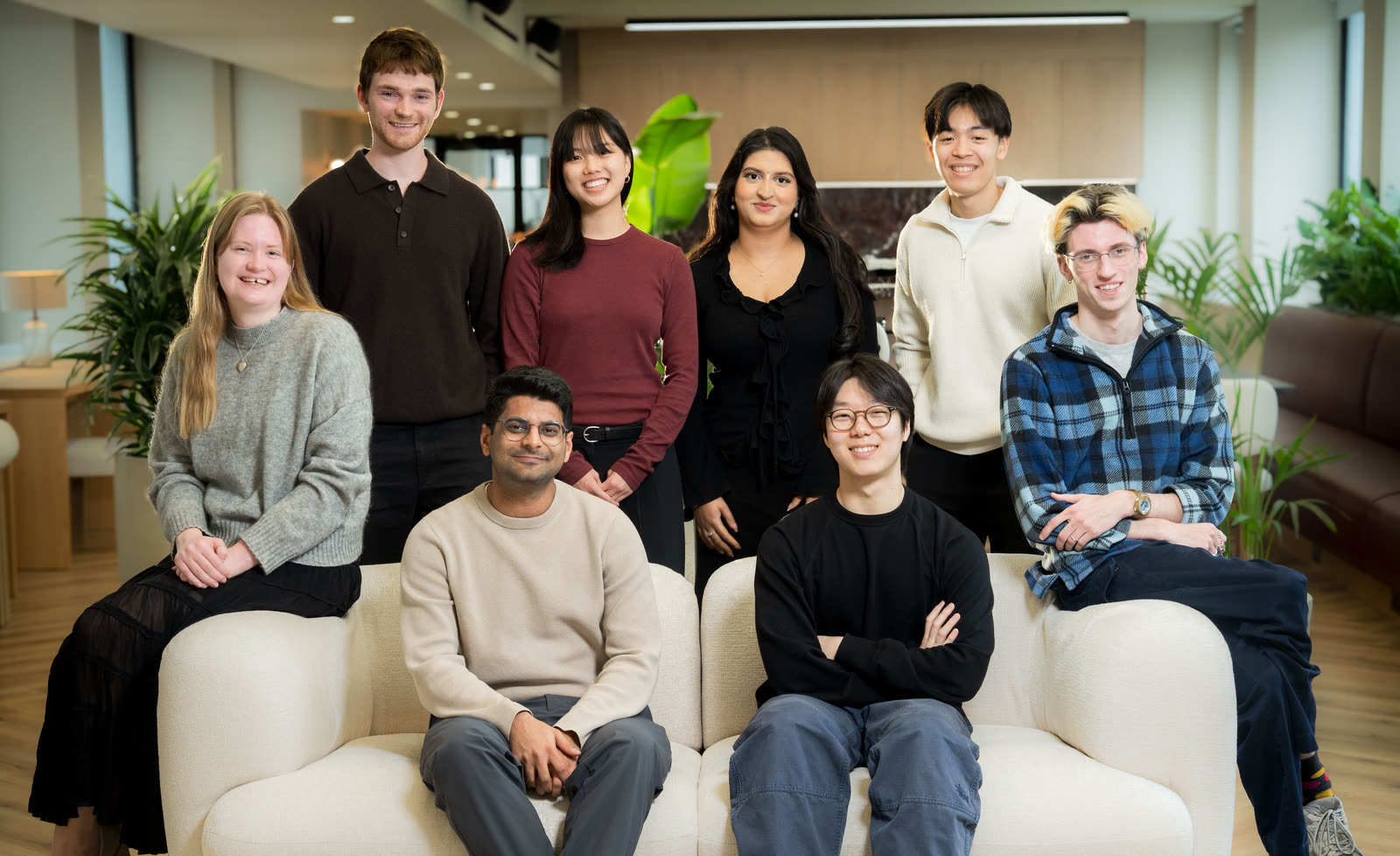
When we hire, we look for people who share our mission and understand why it matters. We value lived experience of educational inequality, work in underserved communities, and a commitment to making education more equal.
Our mission shapes how we work. We move quickly, keep improving what we build, and return to the reason we started: giving more students access to personalised support.
Building for Students
From the start, we've involved students in shaping Medly. We run focus groups with students from different backgrounds, age groups, and ability levels. We watch how they use the platform, where they get stuck, and what works for them. Then we use what we learn to guide what we build.
Students spend an average of 38 minutes a day on Medly. We use that time, alongside what students tell us, to understand how the platform fits into their study routines.
We want Medly to be useful enough that students choose to come back to it. That's why we keep listening to them and improving the way they learn with us.
Results
In the 2025 GCSE results:
| Metric | Result |
|---|---|
| Surveyed students who improved their grades | 74% |
| Students who improved by 2+ grades | 40.5% |
| English Literature improvement | 46% |
| Physics improvement | 43% |
| English Language improvement | 42% |
| Mathematics improvement | 31% |
| Chemistry improvement | 29% |
| Biology improvement | 27% |
These are self reported grades from 398 students who took our Easter mocks and then sat the real thing. We've published the full breakdown in our GCSE results analysis.
Independent GCSE science trial
To find out whether Medly could make a difference to GCSE students' learning, we had an independent randomised controlled trial run. WhatWorked Education designed, randomised and analysed it, with Professor Steve Higgins of Durham University. Students revised the same science topics for 30 minutes a week over four weeks: some were assigned to use Medly, while others used their usual revision methods. Of the 929 students who took the first test, 644 also completed the follow-up test. After accounting for their starting scores, the students assigned to Medly scored an average of 2.56 marks more out of 35 on the follow-up test. This was 22% higher attainment than the comparison group, with an effect size of 0.33. Using the Education Endowment Foundation's scale, the researchers estimate this effect as roughly four months of progress. The study measured test scores over four weeks; it did not measure four months of progress directly. The results also showed no differential impact for students with Pupil Premium status. Read more about the trial and its findings.
Safeguarding
Because many of our users are young people, safeguarding shapes how we build Medly. Our AI-powered safety layer reviews conversations in context rather than relying only on keyword matching. It can detect signs of distress, including suicidal ideation, self-harm, abuse, bullying, eating disorders, and exam anxiety.
When our system detects a concern, it responds with empathy, shares relevant crisis helpline information, and encourages the student to speak to a trusted adult. It doesn't try to counsel students or ask them to share more details. You can read more about our approach in Safety and AI.
Get in Touch
We'd love to hear from you. If you're a student, parent, teacher, or school leader, you can reach us here:
- General enquiries: contact@medlyai.com
- Safeguarding concerns: safeguarding@medlyai.com
We aim to reply within one working day.